
Once you have saved money, then I’d recommend speaking to a mortgage broker if you have not already from Step #1. Ask them what is the lowest downpayment you can qualify for. The minimum is 5% of the purchase price. Once you are pre-approved for a mortgage, you can move to the next step.
#3 Find the Property: Hiring a real estate agent will be the easiest way to purchase one. They will guide you through the transaction process. You also might want to consider asking the agent to look for houses that are 15 days and older on the market. This will give you less competition.
Alternatively, if you want to spend some money and be more active in your search, you may consider sending out letters to your desired neighbourhood. Write on the letter and ask if anyone is interested in selling. One will need to do research on how to prepare these letters so that the letter’s “open rate” is at its highest. Contact me and I can outline the ways “open rates” can be increased. The benefit of this is that you’re not competing with others on the MLS. It may give you time to negotiate with the seller and perhaps get you a good deal.
True Story: Two couples decided to purchase a house in Toronto (Collaboration Strategy). The bank will not lend to them because they are unemployed and are still in school. The mortgage broker said the banks needed two years of self employed income to qualify for a mortgage. It was difficult to find a good job while studying. One of them decided to start a side hustle, a business. Both couples worked hard for two years, they saved everything they could for the downpayment. After they graduated, they went back to the bank. The bank gave them a 95% loan to value mortgage with a 5% down for a property. With money saved from the business and a pre approval on the loan, they were ready to purchase.
After a year of searching and loosing on countless bidding wars, they finally found a little semi in Toronto. The first partner had no money left following the downpayment and legal costs. So the second partner put everything they had left to renovate the house. After months of renovations, the house now has three units. The couple lived in the basement for a period of time and rented out the other units to assist in the monthly payments. Five years later, the property went up in value. They sold the property, took the proceeds and purchase a house that was more appealing with their lifestyle and in a better neighborhood.
This example is very possible, and it can happen to anyone including you. I know because it happened to me. This was the beginning of our story. I’ve experienced this journey with my girlfriend, now my wife.
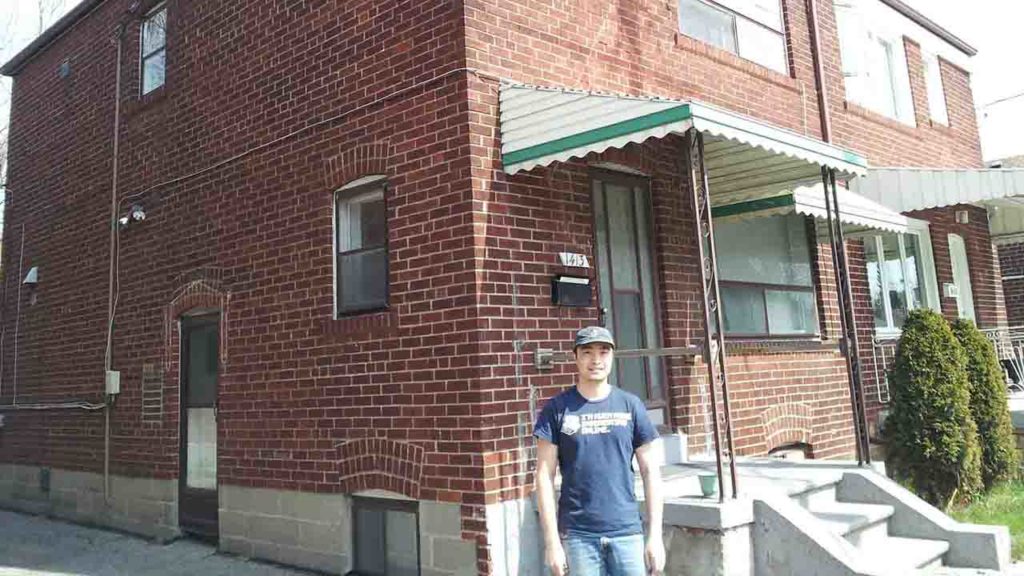
Back then, yes, the property prices were lower, but during that time, in our perspective, everything was expensive just like today. We were outbid many times just like today. Saving was still difficult as well… just like today. I had no knowledge in real estate as I came from a theatre school background, interest rates were higher, and the market just crashed. Everything was against us. Each period in history has its own challenges. But we figured out a way to do it. Thus, one should focus on finding a solution to their current problems. The cavalry is not coming. I’ll keep my problems, you keep yours.
It will become increasingly more difficult to afford a home as prices continue to climb upward in the coming decades. The time is now. Therefore, for those who are truly interested in home ownership, I cannot stress how vital that you start as soon as possible instead always trying to “catch” the wave. For those who do not care, then that’s fine. You can either complain about the market and do nothing, or make changes now in areas of your life where you can control.
How much can you save? Think of it this way: if you gave your bank statements to a financial advisor, will they question any of your transactions? Are you spending the same amount of time looking for a side hustle or a part time job compared to the time you spend on personal enjoyment?
Coincidentally, I bumped into this news coverage a day after I wrote this article, it explains what I’m saying in the “Collaboration Strategy” Model:
If anyone is thinking of co-ownership, contact me, I might know someone else in the same boat. For any problems you can think about co-ownership, I can assist in thinking about a solution.
Note, the above blog is for entertainment purposes only. One should seek professional advice before making any investment decisions. Feature image from Pexels.
Error: Contact form not found.